The Overseas Workers Welfare Administration (OWWA) is a government agency dedicated to supporting Overseas Filipino Workers and their families every step of the way. From financial assistance and educational support to livelihood programs and welfare services, OWWA offers a wide range of benefits designed to help OFWs thrive — both abroad and back home.
As a documented OFW, keeping your membership active is key to unlocking the full range of these benefits, ensuring you and your loved ones are protected no matter what life brings. In Abu Dhabi, you may go to the Migrant Workers Office to renew or you can also register for OWWA online.
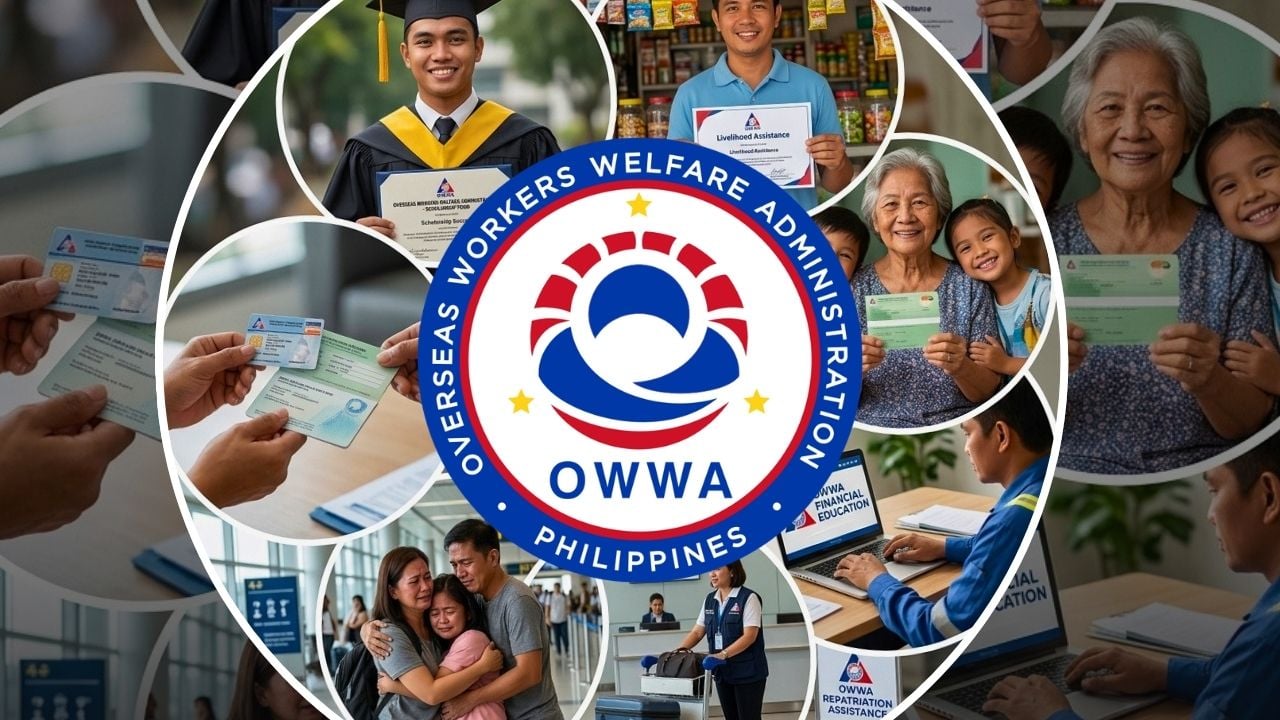
OWWA’s support falls into five main areas – Social Benefits, Education and Training, Welfare Assistance, Reintegration, and Repatriation Assistance.
Social Benefits: Help During Hard Times
Social benefits give financial relief when something serious happens to a member.
- Disability and dismemberment benefit: Members who suffer accident-related injuries can receive up to ₱100,000, depending on the injury.
- Death and burial benefits: Beneficiaries receive ₱100,000 if the member dies of natural causes and ₱200,000 if the death was accidental. An extra ₱20,000 goes toward funeral costs.
- Medplus: This supplemental medical aid is for active OWWA and PhilHealth members hospitalized for serious illnesses. It matches the PhilHealth benefit, up to ₱50,000.
There is also the Welfare Assistance Program (WAP), which covers members and families who don’t qualify for the benefits above. It includes calamity, bereavement, medical, and relief assistance for workers displaced by economic, political, or health crises.
Education and Training: Building Skills and Futures
OWWA supports learning at every stage, from the weeks before deployment to a dependent’s college years.
Before leaving the Philippines, all departing workers attend the Pre-Departure Orientation Seminar (PDOS). This one-day session covers employment contracts, life in the host country, health and safety, financial literacy, and airport procedures. Domestic workers also take a longer program of four to six days that includes language training, cultural orientation, and stress management.
For seafarers, the Seafarer’s Upgrading Program provides up to ₱7,500 for job-related training courses. The Mariner’s Dugtong Aral program helps mechanical and electrical engineering graduates move into marine engineering.
For dependents, several scholarships are available:
- Education for Development Scholarship Program (EDSP): Up to ₱60,000 per school year for qualified students taking a four- or five-year college course.
- OFW Dependent Scholarship Program (ODSP): ₱20,000 per school year for children or siblings of members who earn no more than USD 600 a month.
- Educational Livelihood Assistance Program (ELAP): School allowances and a livelihood package for families of members who have passed away.
OFWs themselves can also use the Skills for Employment Scholarship Program, which covers up to ₱14,500 in tuition for technical or vocational courses.
Welfare Assistance: Support On-Site and at Home
When problems come up at work abroad, OWWA offices overseas can step in. On-site services include:
- Legal assistance
- Psychosocial counseling
- Mediation with employers
- Visits to hospitals, prisons, or work camps
- Help locating missing OFWs
At home, families and returning workers can get temporary shelter at the OWWA Halfway House, transportation to their home provinces, stress debriefing, and referrals to other agencies.
Reintegration: Preparing for the Return Home
Coming home after years abroad brings its own challenges. OWWA’s reintegration programs help returning workers plan their next steps and build stable income.
While still abroad, OFWs can join training in financial literacy, values formation, and entrepreneurship. After returning, they can access job referrals, business counseling, and community support.
Key livelihood programs include:
- Balik Pinas! Balik Hanapbuhay!: Up to ₱20,000 in start-up or extra capital for distressed or displaced returning OFWs.
- OFW Enterprise Development and Loan Program (OFW-EDLP): Business loans offered with Land Bank and the Development Bank of the Philippines. Individuals can borrow ₱100,000 to ₱2 million, and groups up to ₱5 million, at 5% yearly interest. Borrowers need to cover at least 20% of the project cost.
- Tulong PUSO: A one-time grant of up to ₱1 million in equipment, materials, and support for registered OFW organizations running livelihood projects.
Repatriation Assistance: Getting Home Safely
OWWA helps bring distressed OFWs back to the Philippines, along with the remains of workers who pass away abroad. During political unrest or natural disasters, it can carry out emergency repatriation.
Returning workers can receive:
- Airport assistance on arrival
- Temporary shelter
- Counseling and stress debriefing
- Transportation to their home provinces
A Quick Reminder Before You Apply
Most of these programs require an active OWWA membership, along with documents such as proof of membership, valid IDs, and proof of relationship for family claimants. Keeping your membership current makes it easier to get help when you need it.
Benefit amounts, qualifications, and requirements can change over time. Before applying for any program, check the latest rules directly with OWWA through its official website, Facebook page, or the nearest regional or overseas office.